Home · 380 pages · about 8 hours
The Kitchen Garden Year
A Practical Plan for Growing Food on a Small Plot
by Mara Venn
Listen: Start with the Plate
0:00 / 0:00 · narrated by a synthetic voice
$19 when the founding price ends inDec 6
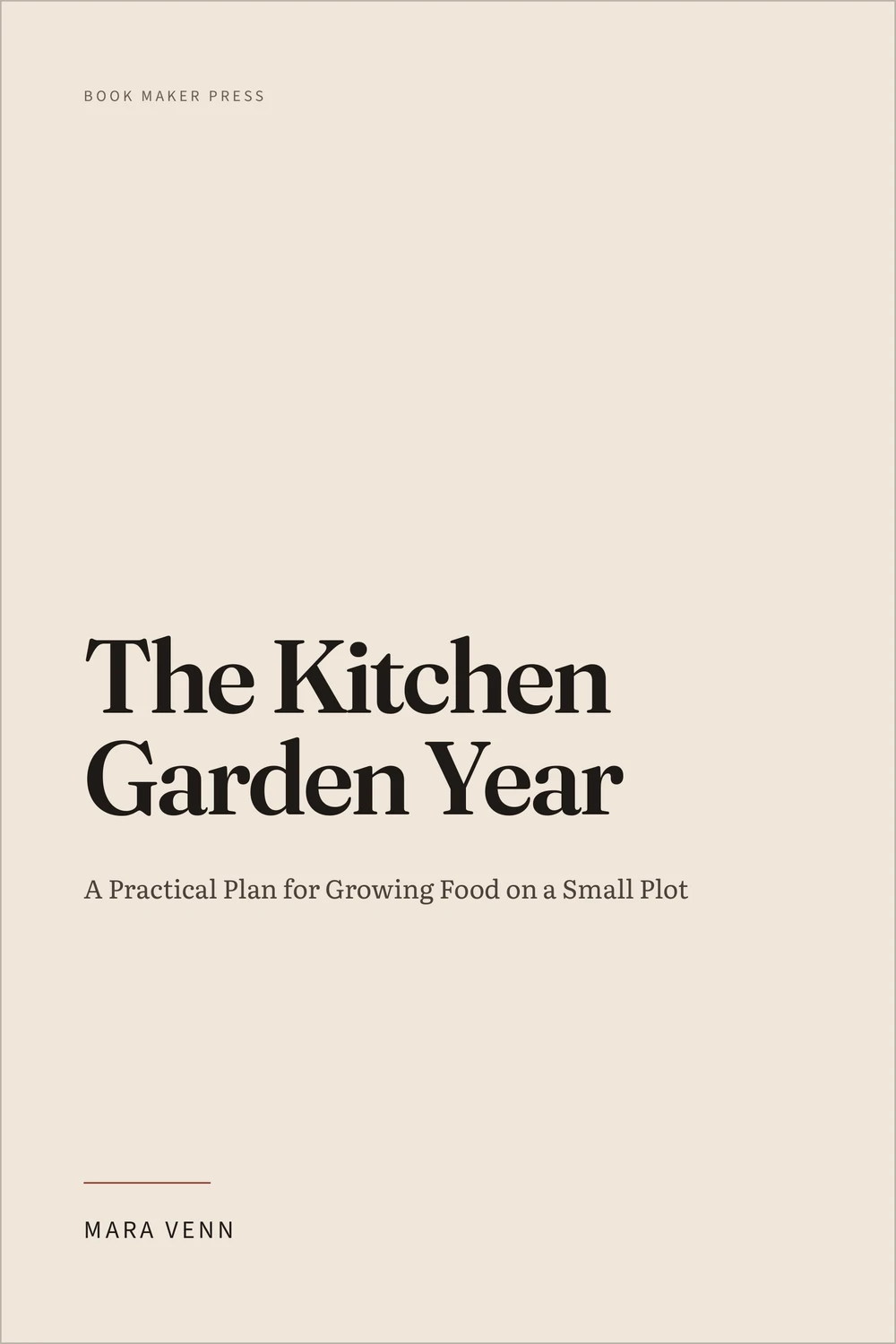
Grow the vegetables your household actually eats on a small plot, month by month.
The Kitchen Garden Year is organized as a calendar, from the December audit of what your household eats to the November decisions on canning and freezing, and it closes with the ledger that answers next year's seed order. You map your own light and standing water, price the plan before buying anything, test-sow a strip before committing a bed, and keep records short enough to actually maintain.
I order seeds for vegetables we never actually eat.
The first chapter asks for one ordinary week in December or early January and a written list of the vegetables your household actually ate. The book opens with a garden planned from catalog pages that grew a striking eggplant nobody in the house had ever cooked, while the weekly onions kept coming from the store.
I bought lumber before I knew where the shade fell.
Chapter 2 sends you outside in January to map the afternoon shade, the corner where water stands for two days after rain, and the distance from the tap to the bed. A plan made before watching the site gets corrected in lumber, delivered soil, and seedlings that die in the wrong light, a correction that has run two hundred dollars more than once.
By August I'm drowning in zucchini and buying lettuce.
Chapter 13 runs harvest as a delivery route, with stops that need checking every day and stops that need checking once a week, and chapter 9 gives succession sowing a visible trigger: when the current patch is supplying meals at a steady rate, sow the next one. The closing chapter visits a first-year garden that grew forty pounds of zucchini, fed the household about twenty, and hauled the rest to the compost bin.
From “Start with the Plate”
The seed catalogs arrive in December, which is a month early for planting and exactly the right month for a mistake. They come into a house that is still eating the evidence of its actual habits: the drawer with the three wilted scallions, the bag of carrots half gone, the salad greens bought on Saturday and softened by the following Friday. A person sitting at the kitchen table in midwinter, circling photographs of heirloom tomatoes, is not looking at that drawer. This is the first planning mistake of the season, and almost everyone makes it, because the catalogs are beautiful and the drawer is not.
I made it myself. My first garden, more than twenty years ago, was planned from a catalog in a rented duplex with a south-facing strip of grass along the driveway. I grew what looked good on the page: purple-podded beans, a specialty eggplant, three kinds of basil. I can tell you what I did not grow, because I remember the grocery trips. I did not grow onions, though I bought them every single week for soups and sauces. I did not grow carrots, though my son ate them daily in his lunch. I grew a striking eggplant that ripened into a vegetable nobody in the house had ever cooked, and it sat on the counter until it was no longer an eggplant. That garden produced photographs. The garden I run now, and the ones I help people plan through our county program, are judged by a different standard: what did the household eat.
So before you order a single seed packet, do something less appealing than a catalog and more useful. Take one ordinary week, sometime in December or early January, and write down the vegetables your household actually ate. Not the vegetables you approve of, and not the vegetables you intend to eat after the garden comes in. The ones that went into mouths. Where they appeared in a meal, what form they arrived in, fresh or frozen or canned or cooked into something, and where they came from. Bought at the store, pulled from your freezer, given by a neighbor with an oversized zucchini plant, supplied by a food pantry or a community garden. Every line gets all of it.
I ask people in our winter workshops to do this, and the first responses are always the same shape. Blank faces, then a guess. Most people, when asked what vegetables they eat, describe an aspiration. They say "a lot of greens," which turns out on paper to mean one bag of spinach a month, two-thirds of which goes brown in the drawer. Or they say "we eat everything," by which they mean they are polite at other people's tables. The record is humbler than the self-image. That is not a flaw in the household. It is the whole point of the record. You are not auditing your virtue. You are taking inventory of demand, and demand does not care what you meant.
What is inside
20 chapters, 113,700 words.
- 1
Start with the Plate
Build the crop list from a one-week audit of what your household actually ate, before you open a seed catalog.
- 2
Read the Plot Before You Buy
Map your real plot in January: the afternoon shade, the standing water, the slope, the tap, and whoever else uses the space, before money leaves the house.
- 3
Spend for the Bottleneck
Price every item the plan implies and sort the spending into one-time tools, yearly seed and amendments, and seasonal water, so the budget grows out of the site drawing.
- 4
Make Soil a Measured Decision
Read puddles and squeeze soil after rain before you touch anything, then use a lab test for chemistry while keeping your own observations in a separate record.
- 5
Fit the Crops to the Space
Draw the paths first on graph paper, then fit crops, water routes, and a labor bill into the space that survives your site's limits.
- 6
March Is for Dates, Not Predictions
Translate your own season by reading frost probability tables with their thirty-year record periods, and learn to check soil temperature at four inches instead of trusting a warm week of afternoons.
- 7
The First Sowing Is a Test
Sow a labeled strip two or three feet long first, so any failure has an address: crop, place, depth, date, and conditions.
- 8
Transplant Only What Can Settle In
Choose transplants by the stem-soil line, the leaf undersides, and the roots at the drainage holes, then harden them off on an eight-day schedule that bends to the forecast.
- 9
June Is the Month to Keep Beds Moving
Keep beds moving with a short crop list and a visible trigger: when the current patch is supplying meals at a steady rate, sow the next one.
- 10
Water for Roots, Not for Reassurance
Water from a ninety-second trowel test at root depth, and pick among hose, sprinkler, soaker, and drip by which failure you can afford to keep checking.
- 11
Weeds Win by Getting There First
Catch the first flush of weeds while the seedlings are lentil-sized, label every row at sowing, and skip the deep turning that brings next month's weed seed to the surface.
- 12
Find the Damage Before Choosing a Cure
Describe the damage before naming a cause, a four-minute inspection that reads hole edges and plant location before any spray is bought.
- 13
Harvest Before the Kitchen Is Full
Pick by crop-specific cues like broccoli buds before they open, run harvest as a route with daily and weekly stops, and write a one-line destination note per picking.
- 14
A Failed Crop Still Leaves Choices
Scratch the stem and check the roots before declaring a crop dead, change one condition at a time, and learn the signs that say stop spending on a planting.
- 15
Let Heat Change the Schedule
Tell a 2 p.m. wilt from a 7 a.m. wilt, check the soil before the plant, and run a three-task priority order on the worst heat days.
- 16
September Is a Second Beginning
Count backward from your local killing frost date, the days to maturity, and a fall light allowance to learn whether your September is a second spring or a closing week.
- 17
Frost Sets the Last Appointment
Use the 1991 to 2020 climate normals, with the median first freeze and the early and late 10 percent dates, to sort each crop into harvest, cover, or let go.
- 18
Storage Is Another Growing Condition
Sort the harvest into three containers, sound, eat-first, and compost, and give each crop conditions you have checked, from onion curing to cold storage temperatures.
- 19
Preserve Only by a Tested Method
Decide in November which surplus goes to canning, freezing, or drying, based on measured freezer space, equipment you own, your elevation, and tested recipes that require acidification.
- 20
Keep the Record, Change the Plan
Keep a ledger whose entries take under two minutes, recording what the household gained rather than what the plot produced, and let it answer the next seed order.
Written for you if
- It is written for first- and second-year food gardeners on a small plot: a few beds, a community square, or a rented strip of ground.
- It fits gardeners who want each month's job named and dated, from the December audit to the October storage sort.
- It speaks to anyone whose compost bin has taken more of the harvest than the household did.
The Kitchen Garden Year, $12
- EPUB and PDF, no DRM
- 380 pages, download right away
- Keeps in your library for good
- 30-day refund, no questions
Founding price until December 6, 2026, then $19.
Questions
On the same shelf

The Kitchen Garden Year
Buy · $12